Benvenuto
Oggi parleremo di cibo — ma non nel modo in cui di solito lo senti.
Niente sensi di colpa. Niente mode. Niente diete miracolose.
Il cibo è tre cose contemporaneamente: è carburante (energia per muoverti e pensare), materiale costruttivo (il tuo corpo si ricostruisce costantemente), e informazione (segnali chimici che dicono alle tue cellule cosa fare).
La maggior parte dei consigli sulla nutrizione su Internet tratta il cibo come una sola di queste cose. È da lì che inizia la confusione.
Alla fine di questa lezione capirai cosa il cibo fa davvero dentro di te — e perché il miglior approccio all'alimentazione è più semplice di quanto Internet suggerisca.
Riscaldamento
Verifica Veloce
Prima di iniziare, notiamo qualcosa.
I Tre Grandi
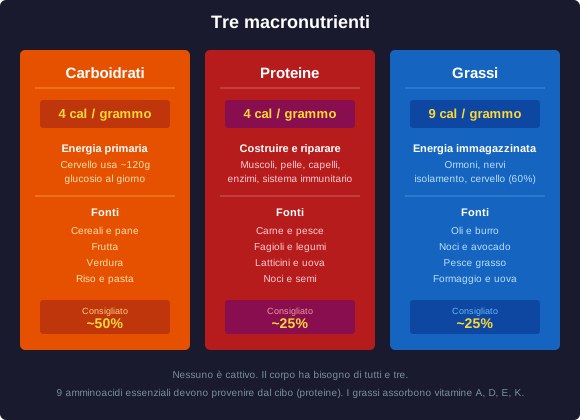
Macronutrienti: I Tre Grandi
Tutto quello che mangi è fatto di tre blocchi costruttivi principali, chiamati macronutrienti (macro = grande). Il tuo corpo ha bisogno di tutti e tre.
Carboidrati — La fonte di energia preferita dal tuo corpo. Pane, riso, frutta, verdura, zucchero — tutti carboidrati. Il tuo cervello da solo usa circa 120 grammi di glucosio (un carboidrato) al giorno.
Proteine — Materiale costruttivo e di riparazione. I tuoi muscoli, la pelle, i capelli, gli enzimi e il tuo sistema immunitario sono tutti costruiti da proteine. Le proteine sono fatte di unità più piccole chiamate aminoacidi — il tuo corpo può crearne alcune, ma nove aminoacidi 'essenziali' devono provenire dal cibo.
Grassi — Non sono il nemico. I grassi producono ormoni, isolano i tuoi nervi, proteggono i tuoi organi e sono essenziali per la funzione cerebrale. Il tuo cervello è circa il 60% grasso per peso secco. I grassi aiutano anche ad assorbire le vitamine A, D, E e K.
Nessuno di questi è un cattivo. Ogni decennio, la cultura popolare ne sceglie uno da demonizzare — i grassi negli anni '90, i carboidrati negli anni 2010. La scienza non è cambiata: hai bisogno di tutti e tre.
Perché gli Atleti Hanno Bisogno di Più Proteine
Proteine e Sforzo Fisico
Quando fai esercizio intenso, crei piccoli strappi nelle fibre muscolari. Sembra male, ma è in realtà come i muscoli crescono — il tuo corpo ripara gli strappi e rende le fibre leggermente più forti.
Questo processo di riparazione richiede aminoacidi dalle proteine.
Vitamine e Minerali
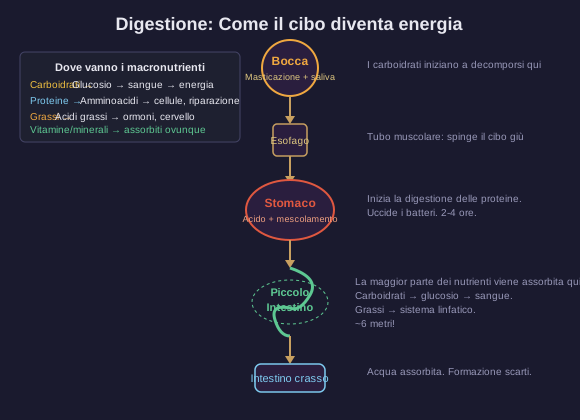
Micronutrienti: Piccole Quantità, Grande Impatto
I macronutrienti sono la maggior parte di quello che mangi. Micronutrienti — vitamine e minerali — sono necessari in piccole quantità, ma senza di loro il tuo corpo si deteriora.
Ferro — Trasporta l'ossigeno nel sangue. Senza abbastanza ferro, le tue cellule sono prive di ossigeno e ti senti esausto. Questo si chiama anemia.
Calcio — Costruisce e mantiene le ossa e i denti. Il tuo corpo usa anche il calcio per la contrazione muscolare e la segnalazione nervosa. Se non ne ricevi abbastanza dal cibo, il tuo corpo lo estrae dalle ossa.
Vitamina D — Supporta il tuo sistema immunitario e aiuta ad assorbire il calcio. La maggior parte delle persone è carente perché la otteniamo principalmente dalla luce solare, e la vita moderna avviene principalmente al chiuso.
Vitamina C — Supporta la funzione immunitaria ed è essenziale per la creazione del collagene (la proteina che mantiene insieme la pelle, i tendini e i vasi sanguigni). Gli umani sono uno dei pochi mammiferi che non possono produrre la propria vitamina C — dobbiamo ottenerla dal cibo.
Il Problema dello Scorbuto
Un Enigma Storico
Per secoli, i marinai su lunghi viaggi oceanici svilupperebbero una terribile malattia. Le loro gengive sanguinerebbero, i denti cadrebbero, le vecchie ferite si riaprirebbero, e alla fine morirebbero.
Questa malattia si chiama scorbuto, e ha ucciso più marinai di tempeste, battaglie e tutte le altre malattie messe insieme.
Calorie dentro, Calorie Fuori
Bilancio Energetico: Reale ma Eccessivamente Semplificato
Probabilmente hai sentito la frase calorie dentro, calorie fuori — l'idea che se mangi più energia di quella che bruci, guadagni peso, e se mangi meno, perdi peso.
Questo è tecnicamente vero. È la prima legge della termodinamica applicata alla biologia. L'energia non può apparire dal nulla o scomparire.
Ma è anche profondamente fuorviante come consiglio pratico, perché tratta il corpo come una semplice fornace. Il tuo corpo non è una fornace.
Il metabolismo varia. Due persone della stessa dimensione possono avere tassi metabolici basali che differiscono di 200-300 calorie al giorno. Genetica, massa muscolare, sonno, stress e ormoni svolgono tutti un ruolo.
Non tutte le calorie si comportano allo stesso modo. 200 calorie di broccoli e 200 calorie di caramelle hanno energia identica, ma effetti molto diversi sulla tua glicemia, sazietà e assunzione di nutrienti.
Il cibo elaborato è progettato. I produttori alimentari impiegano scienziati per trovare il 'punto di felicità' — la combinazione di zucchero, sale e grassi che massimizza il desiderio e minimizza la sazietà. Non è una teoria del complotto; è una pratica standard del settore documentata in ricerche pubbliche.
Leggere le Etichette Nutrizionali
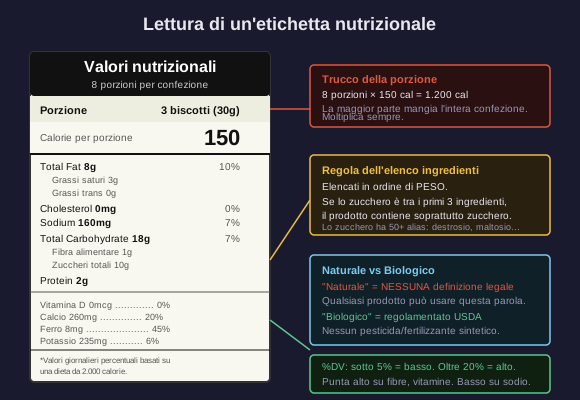
Etichette Alimentari: Cosa Mostrano e Cosa Nascondono
L'etichetta nutrizionale sui prodotti confezionati è uno degli strumenti più utili che hai — se sai come leggerla.
Dimensione della porzione — Questo è dove le aziende sono furbe. Una bottiglia di soda potrebbe elencare 100 calorie per porzione, ma la bottiglia contiene 2,5 porzioni. La maggior parte delle persone beve l'intera bottiglia.
Elenco degli ingredienti — Gli ingredienti sono elencati in ordine di peso, dal più al meno. Se lo zucchero (o uno dei suoi 50+ alias: sciroppo di mais ad alto fruttosio, destrosio, maltosio, ecc.) è tra i primi tre ingredienti, quel prodotto è principalmente zucchero.
'Naturale' — Questa parola non ha una definizione legale quando usata sulle etichette alimentari negli Stati Uniti. Qualsiasi prodotto può chiamarsi naturale. È puro marketing.
'Biologico' — Questa parola ha una definizione legale. USDA Organic significa che il cibo è stato prodotto senza pesticidi sintetici, fertilizzanti sintetici o OGM, ed è stato ispezionato. Non significa automaticamente più salutare, ma significa qualcosa di specifico.
Il divario tra 'naturale' (senza senso) e 'biologico' (regolamentato) è un buon esempio di perché la lettura critica è importante.
Mangia Cibo, Non Troppo, Per Lo Più Piante
Tagliare il Rumore
Lo scrittore Michael Pollan ha passato anni a rivedere la ricerca sulla nutrizione e l'ha condensata in sette parole:
Mangia cibo. Non troppo. Per lo più piante.
Mangia cibo — intendo vero cibo, non prodotti pesantemente elaborati con elenchi di ingredienti che non riesci a pronunciare. Se tua bisnonna non lo riconoscerebbe come cibo, sii scettico.
Non troppo — intendo presta attenzione ai segnali di fame e sazietà. Il cibo elaborato è progettato per ignorare questi segnali, quindi mangiare più cibi interi aiuta naturalmente a consapevolezza delle porzioni.
Per lo più piante — intendo frutta, verdura, legumi, noci e cereali dovrebbero essere la base della tua dieta. Non è un argomento vegano — è quello che le prove mostrano costantemente tra le culture e i decenni di ricerca.
È tutto qui. Non un piano alimentare da 200 dollari. Non uno stack di integratori. Non una disintossicazione. Sette parole supportate da decenni di ricerca nutrizionale.
Cosa Ricorderai?
Riepilogo
Ecco quello che hai imparato oggi:
- Il cibo è carburante, materiale costruttivo e informazione
- Carboidrati, proteine e grassi sono tutti essenziali — nessuno è il cattivo
- I micronutrienti come ferro, calcio, vitamina D e vitamina C sono necessari in piccole quantità ma hanno effetti enormi
- 'Calorie dentro, calorie fuori' è fisica reale ma biologia eccessivamente semplificata
- Le etichette alimentari sono progettate per vendere, non per educare — leggile criticamente
- Il miglior consiglio nutrizionale entra in sette parole: mangia cibo, non troppo, per lo più piante
La scienza della nutrizione è vera scienza. Ma l'industria della nutrizione è marketing. Imparare a distinguere è una delle abilità più pratiche che puoi sviluppare.