Una Herramienta Común
Los Sistemas Automatizados Son Herramientas Comunes
Los sistemas automatizados ahora se sitúan entre tú y casi todo: dirigen tu dinero, clasifican lo que lees, ordenan solicitudes de empleo, califican cuestionarios, recomiendan medicamentos y redactan textos. Esta lección los trata no como un tema especial, sino como lo que son: una clase de herramienta rápida, poderosa y cada vez más dominante.
Una herramienta tiene un mango y un filo. El mango es lo que la hace útil; el filo es donde puede cortarte. Una calculadora, un motor de búsqueda y un asistente automatizado comparten la misma transacción: hacen trabajo por ti, pero pueden hacer el trabajo incorrecto con confianza, y es posible que no lo notes.
Las personas hábiles no preguntan "¿debería usar herramientas o no?". Preguntan tres cosas más precisas: ¿Qué debo delegar? ¿Cómo verifico el resultado? ¿Quién es responsable cuando algo sale mal? Esas tres preguntas son toda la lección.
Calentamiento
Antes de construir el marco, una breve reflexión.
Tres pruebas
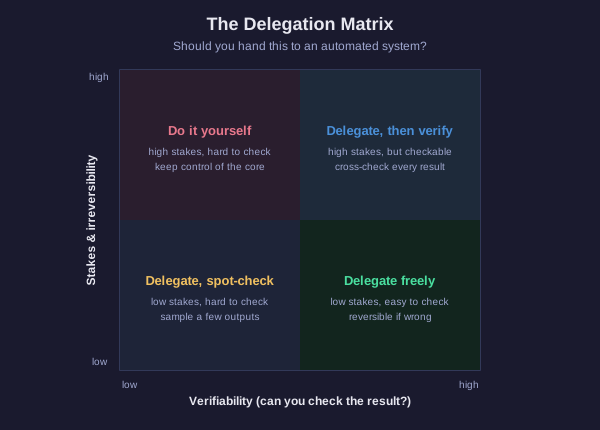
Apuestas, Reversibilidad, Verificabilidad
Si entregar una tarea a un sistema automatizado o no depende de tres propiedades de la tarea, no de lo impresionante que parezca el sistema.
1. Apuestas. ¿Qué se rompe si el resultado es incorrecto? Una recomendación musical errónea te cuesta tres minutos. Una dosis incorrecta, una cifra fiscal errónea o un resumen médico equivocado cuestan mucho más. Cuantas mayores sean las apuestas, mayor debe ser la precaución.
2. Reversibilidad. ¿Puedes deshacer un resultado malo? Un borrador que puedes reescribir es reversible. Un pago que ya enviaste, un mensaje ya entregado, una decisión ya ejecutada: esas cosas resisten ser deshechas. Irreversible más de alto riesgo es la zona de peligro.
3. Verificabilidad. ¿Puedes comprobar el resultado contra algo independiente? Si no puedes distinguir una respuesta correcta de una incorrecta, delegar es una apuesta, no un atajo.
Lee la matriz anterior. Apuestas bajas y fácil de verificar: delega libremente. Apuestas altas pero verificable: delega y verifica cada vez. Apuestas altas y difícil de verificar: mántelo tú mismo. Apuestas bajas pero difícil de verificar: delega y realiza comprobaciones puntuales.
Clasifica las tareas
Tu turno: Clasifica cuatro tareas
Aquí tienes cuatro tareas que podrías delegar a un sistema automatizado:
- A. Redactar el texto de la invitación para la fiesta sorpresa de un amigo.
- B. Calcular las cifras finales de la declaración de impuestos de tu familia.
- C. Resumir un capítulo que debes discutir y defender en clase mañana.
- D. Sugerir diez canciones para una lista de reproducción de viaje en carretera.
Cómo fallan los sistemas automatizados
Cuatro formas en que la salida sale mal
Los sistemas automatizados no fallan como un programa que se bloquea y muestra un error. Fallan mientras parecen estar perfectamente bien. Aprende estas cuatro señales.
1. Seguro pero equivocado. La salida llega fluida, con formato y con total seguridad, y es simplemente falsa. La confianza en la presentación no te dice nada sobre la corrección. Una respuesta incorrecta y una correcta se ven igual de pulidas.
2. Datos obsoletos o sesgados. El sistema razona sobre lo que se le ha proporcionado. Si esos datos están desactualizados, no son representativos o están sesgados, la salida hereda el defecto: precios del año pasado, un conjunto de entrenamiento que subrepresenta a algún grupo, un feed que solo te muestra un lado de la historia.
3. Malentender la intención. Pediste una cosa; el sistema resolvió un problema cercano pero diferente. Querías un resumen que mantuviera los contraargumentos; te dio un resumen que los aplanó. Respondió a una pregunta que no hiciste.
4. Optimizar lo equivocado. El sistema maximiza exactamente lo que se le indicó, lo cual no siempre es lo que querías. Un feed al que se le indica maximizar el tiempo de visualización aprende a mantenerte haciendo scroll, no a informarte. Este es el fallo más sutil: el sistema tiene éxito en su objetivo y te falla a ti.
La señal para los cuatro es la misma disciplina: nunca dejes que una presentación fluida sustituya a una verificación.
Detecta el Error
Tu turno: Detecta una salida verosímil
Una herramienta de presupuestación te da este resumen del mes pasado:
'Gasto total: $1.200 en 30 días. Tu promedio diario fue de aproximadamente $75 por día. El gasto parece estar bien controlado.'
La herramienta suena segura y el formato parece limpio.
Tres formas de verificar
Ajusta la verificación a lo que está en juego
Verificar consume tiempo, por lo que debes ajustar el esfuerzo a lo que está en riesgo. Verificar en exceso una lista de reproducción desperdicia tu tiempo; verificar insuficientemente un horario médico pone en riesgo la vida de otra persona. Tres herramientas, de la más barata a la más exhaustiva.
Verificación por muestreo. Toma una muestra aleatoria de algunos resultados e inspecciónalos de cerca. Es ideal para trabajos de alto volumen y bajo riesgo: si tres de tres elementos muestreados parecen correctos, extiendes una confianza limitada al resto.
Contrasta con una fuente independiente. Confirma el resultado con algo que no comparta los datos ni las suposiciones del sistema: una segunda herramienta, un registro oficial, una persona que sepa del tema. La independencia es la clave; dos sistemas que dependen de los mismos datos defectuosos pueden coincidir mientras ambos están equivocados.
Realiza una comprobación de sentido con lo que sabes. Compara la salida con hechos y magnitudes aproximadas en los que ya confías. Así detectaste el error del presupuesto: sabías que 1.200 en 30 días no está ni de cerca en 75. Esto cuesta casi nada y detecta una sorprendente cantidad de fallos.
La regla: la verificación aumenta con la importancia y la irreversibilidad. Lo trivial y reversible merece una mirada; lo costoso e irreversible merece una verificación cruzada independiente cada vez.
¿Cuánta verificación?
Tu turno: Dos tareas, dos verificaciones
Un asistente automático redacta dos cosas para ti:
- A. Un mensaje de texto a un amigo sugiriéndole que se encuentren a las 7 en lugar de las 6.
- B. El horario semanal de medicación para tu abuelo mayor, listando dosis y horarios.
Si lo publicas, es tuyo
"El sistema lo dijo" no es una defensa
Esta es la regla que separa a un profesional de un espectador: el humano que publica la salida es el propietario de la salida. Cuando lo envías, lo compartes o actúas en consecuencia, se convierte en tuyo. El sistema que ayudó es una herramienta, y las herramientas no asumen la culpa.
«El sistema lo dijo» falla como defensa por una razón simple: tomaste dos decisiones que el sistema no podía tomar por ti. Elegiste delegar esta tarea y elegiste con qué rigor verificar el resultado. Ambas decisiones fueron tuyas, por lo tanto, el resultado es tuyo.
Esto no es injusto contigo; es lo que te mantiene en control. Si la responsabilidad pudiera transferirse a una herramienta, nadie verificaría nada y cada fracaso sería un huérfano. La propiedad es el precio y la recompensa de usar herramientas poderosas.
¿De quién es la culpa?
Tu turno: Un proyecto de grupo
Tu equipo usó una herramienta automatizada para calcular las cifras de un informe. Una cifra estaba incorrecta, nadie la verificó y el equipo perdió puntos. Un compañero encoge los hombros y dice: «La herramienta nos dio ese número, así que no es nuestra culpa».
Mantén tus manos en el trabajo
Mantenimiento de habilidades y la ilusión de competencia
Un peligro se esconde bajo todos los demás. Si delegas por completo una habilidad, pierdes lentamente la capacidad de verificar la herramienta que te reemplazó. No puedes detectar un error en un trabajo que ya no eres capaz de realizar.
Observar cómo una herramienta realiza algo con fluidez produce una ilusión de competencia: sientes que lo entiendes porque el resultado final parece fácil y obvio. Pero reconocer una respuesta correcta cuando te la entregan no es lo mismo que ser capaz de producirla o verificarla por ti mismo. La sensación de comprensión se adelanta a la habilidad real.
La defensa es deliberada: sigue haciendo suficiente del trabajo central a mano para mantenerte afilado. Haz la aritmética tú mismo a veces. Escribe el borrador desde cero a veces. Lee la fuente primaria tú mismo a veces. No estás siendo ineficiente; estás manteniendo exactamente la capacidad que te permite detectar cuando la herramienta falla. Los mejores operadores de sistemas automatizados mantienen sus propias manos en el trabajo.
¿Qué vas a llevar contigo?
Un último pensamiento
Ahora posees un marco completo: decide qué delegar según las apuestas, la reversibilidad y la verificabilidad; reconoce los cuatro modos de fallo; verifica en proporción a lo que está en juego; asume la responsabilidad de todo lo que entregues; y mantén tus propias habilidades lo suficientemente afiladas para detectar el error de la herramienta.
Los sistemas automatizados solo se volverán más capaces y más integrados en tu vida. Esto hace que este marco sea más valioso con el tiempo, no menos. La persona que puede delegar sabiamente y verificar bien posee una ventaja que no caduca.