欢迎

欢迎来到你的第一节 Python 课程。
Python 是世界上最受欢迎的编程语言之一。科学家、工程师、艺术家和学生每天都在使用它。
在本课中,你将编写真实的 Python 代码并立即运行它。你的代码在真实服务器上执行——不是模拟。
让我们从计算机中最著名的程序开始。
Hello, World!
你的第一个程序
每个程序员的旅程都从相同的两个词开始:Hello, World!
在 Python 中,你使用 print() 函数将文本打印到屏幕上:
print("Hello, World!")
就这样。一行。引号告诉 Python 这是文本(称为 字符串)。print() 函数将其发送到屏幕。
什么是变量?

变量:为值赋予名称
变量是一个保存值的名称。把它想象成一个标记的盒子。
name = "Ada"
age = 12
print(name) — 打印:Ada
print(age) — 打印:12
= 号表示赋值——把右边的值放入左边的名称。
文本放在引号中(一个字符串)。数字不需要引号(一个整数)。
创建变量
轮到你了
创建两个变量并打印它们:
1. 一个名为 animal 的变量,设置为你最喜欢的动物
2. 一个名为 count 的变量,设置为它有多少条腿
3. 打印两个变量
示例输出(你的会不同):
cat
4
合并字符串

字符串连接
你可以使用 + 将字符串连接在一起:
greeting = "Hello" + " " + "World"
print(greeting) — 打印:Hello World
f 字符串(格式化字符串)
将变量混合到文本中的更好方式:
name = "Ada"
print(f"My name is {name}") — 打印:My name is Ada
引号前的 f 激活 f 字符串模式。在字符串中,{variable} 被替换为变量的值。
f 字符串练习
轮到你了
创建两个变量:
- food — 你最喜欢的食物(一个字符串)
- rating — 你对它的评分,从 1 到 10(一个整数)
然后使用 f 字符串打印:
I love pizza! I rate it 9 out of 10.
(用你自己的食物和评分)
If / Else
做出决定
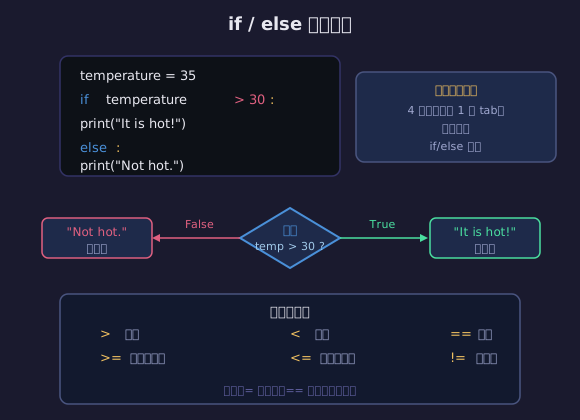
程序可以使用 if 和 else 做出选择:
temperature = 35
if temperature > 30:
print("It is hot!")
else:
print("It is not hot.")
if 下的缩进代码仅在条件为 True 时运行。
else 下的代码在条件为 False 时运行。
比较运算符:> (大于)、< (小于)、== (等于)、!= (不等于)、>=、<=
If/Else 挑战
轮到你了
编写一个程序,其中:
1. 创建一个名为 score 的变量,设置为任何数字
2. 如果 score 是 60 或以上,打印 Pass
3. 否则,打印 Fail
综合运用
最终挑战
你现在知道:print()、变量、f 字符串和 if/else。
在一个程序中将它们全部结合起来。
编写一个程序,其中:
1. 建立變數 name(一個名字,字串)
2. 建立變數 age(一個年齡,整數)
3. 如果 age 是 13 或以上,打印:Welcome, [name]! You may enter.
4. 否则,打印:Sorry, [name]. You must be 13 to enter.
对输出使用 f 字符串。