Die knappe Fähigkeit
Die Kunst der Frage
Für die meiste Zeit der Geschichte war der schwierige Teil der Wissensarbeit das Erzeugen der Antwort: die Berechnung durchführen, den Entwurf schreiben, die Tatsache recherchieren. Dieser Teil wird billig und schnell. Daten, Suche und automatisierte Systeme generieren nun auf Abruf plausible Antworten.
Daher verschiebt sich die Engstelle. Wenn Antworten billig sind, wird die knappe, hochwertige Fähigkeit das Formulieren des richtigen Problems und das Stellen der richtigen Frage: an Menschen, an Daten und an automatisierte Systeme. Eine vage Frage verschwendet selbst einen perfekten Antwort-Engine. Eine präzise Frage multipliziert ihn.
Diese Lektion trainiert fünf Schritte, die eine gute Frage von einer faulen trennen:
1. Verborgene Annahmen aufdecken: Beachte, was eine Frage stillschweigend voraussetzt.
2. Entscheidende Beweise definieren: Sage, was die Sache klären oder deine Meinung ändern würde.
3. Zerlegen: Zerlege ein schwieriges Problem in einen Baum von beantwortbaren Teilfragen mit Abhängigkeiten.
4. Anforderungen formulieren: Benenne, was eine gute Antwort enthalten muss, bevor du nach ihr suchst.
5. Neu rahmen: Erkenne, dass dieselbe Situation, auf zwei Arten gefragt, zu zwei verschiedenen Antworten führt, und dass die Wahl des Rahmens eine Form von Macht ist.
Eine Frage, die man dir gestellt hat
Bevor wir beginnen, eine kurze Reflexion.
Die Frage, die eine Antwort einschmuggelt
Eine Frage kann ihre eigene Antwort enthalten
Das klassische Beispiel: „Hast du aufgehört, bei Prüfungen zu schummeln?“ Es gibt keine sichere Antwort. „Ja“ gibt zu, dass du früher geschummelt hast. „Nein“ gibt zu, dass du es noch tust. Die Frage presupponiert (voraussetzt), dass du geschummelt hast. Diese Voraussetzung wurde nie begründet. Sie wurde eingeschmuggelt.
Dies ist eine geführte Frage (auch komplexe oder lenkende Frage genannt): Sie birgt eine Annahme, als wäre sie bereits geklärt, und zwingt dich, daran vorbei zu antworten. Die Annahme reitet gratis mit, ungeprüft.
Geladene Framings verstecken sich überall, nicht nur in trickreichen Fragen:
- „Wie können wir das Marketing-Budget kürzen?“ setzt voraus, dass das Budget gekürzt werden sollte und dass Marketing das Problem ist.
- „Welchen Wettbewerber sollten wir kopieren?“ setzt voraus, dass das Kopieren eines Wettbewerbers überhaupt die richtige Strategie ist.
- „Warum ist diese Generation so faul?“ setzt voraus, dass die Generation faul ist, noch bevor es Beweise dafür gibt.
Die Verteidigung ist einfach und wirkungsvoll. Bevor man auf eine Frage antwortet, fragt man, was sie voraussetzt. Man benennt die unterschlupfen Behauptung laut. Dann entscheidet man, ob diese Behauptung akzeptiert werden sollte oder ob sie die eigentliche Frage sein sollte.
Erkenne die versteckte Annahme
Deine Reihe
Ein Manager fragt das Team:
„Was ist der schnellste Weg, damit Kunden aufhören, sich über unsere Support-Hotline zu beschweren?“
Entscheidende Beweise definieren
Die Frage hinter jeder echten Frage
Eine Frage, zu der Sie sich keine Antwort vorstellen können, ist noch keine echte Frage. Also, bevor Sie irgendetwas untersuchen, fragen Sie: welche Beweise würden dies klären? Und die schärfere Variante: was würde meine Meinung ändern?
Wenn nichts Ihre Meinung ändern könnte, stellen Sie keine Frage, sondern verteidigen Sie eine Schlussfolgerung. Die Nennung Ihrer entscheidenden Beweise im Voraus hat zwei Vorteile. Es hält Sie ehrlich, weil Sie sich dafür verpflichtet haben, bevor Sie das Ergebnis gesehen haben. Und es zeigt Ihnen, was Sie messen müssen, was in der Regel der schnellste Weg zu einer Antwort ist.
Eine starke Frage kommt mit ihrem eigenen Test: „Ich glaube an X. Ich würde X aufgeben, wenn ich Y sähe.“ Wenn Sie Y nicht ausfüllen können, ist die Überzeugung noch nicht überprüfbar, und auch die Frage nicht.
Eine schwierige Frage in einen Baum zerlegen
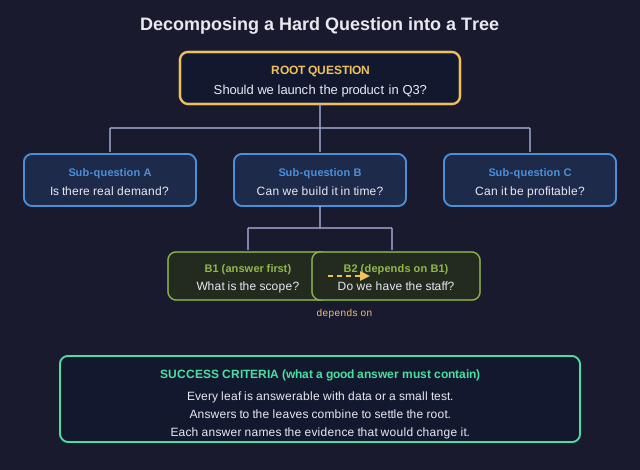
Von einer schwierigen Frage zu vielen beantwortbaren Fragen
Eine große Frage wie „Sollten wir das Produkt im Q3 launchen?“ kann nicht direkt beantwortet werden. Sie ist zu groß. Der Schritt ist Dekomposition: Brich sie in Teilfragen auf, die jeweils kleiner und leichter zu beantworten sind, bis du Fragen erreichst, die du mit Daten oder einem schnellen Test klären kannst.
Die Teilfragen bilden einen Baum. Die Wurzel ist die Entscheidung. Die Äste sind die Komponenten, von denen sie abhängt: Gibt es echte Nachfrage? Können wir es rechtzeitig bauen? Kann es profitabel sein? Manche Äste verzweigen sich erneut. Und manche Teilfragen haben Abhängigkeiten: Du kannst „Haben wir genug Personal?“ nicht beantworten, bevor du „Was ist der Umfang?“ beantwortet hast. Die Reihenfolge ist wichtig. Beantworte zuerst die Fragen, von denen andere abhängen.
Gute Dekomposition hat zwei Eigenschaften. Die Teilfragen sind jeweils beantwortbar (ein Blatt, das du tatsächlich klären kannst), und zusammen sind sie ausreichend (beantworte sie alle, und die Wurzel ist geklärt). Verpasst du einen Ast, hat deine Antwort eine Lücke.
Ein unübersichtliches Problem dekomponieren
Deine Aufgabe: Dekomponiere es
Hier ist ein unübersichtliches, reales Problem, vor dem ein Studentenverein steht:
„Unser Robotik-Verein verliert Mitglieder. Sollten wir ändern, wie wir ihn führen?“
Beantworte nicht, ob sie etwas ändern sollten. Stattdessen zerlege das Problem in einen strukturierten Satz von Teilfragen, die der Club zuerst beantworten müsste, nenne mindestens eine Abhängigkeit (welche Teilfrage muss vor einer anderen beantwortet werden) und formuliere mindestens ein Erfolgskriterium: Was muss eine gute Antwort auf das Gesamtproblem enthalten?
Gleiche Situation, zwei Fragen, zwei Antworten
Die Wahl des Rahmens ist eine Form von Macht
Die gleiche Situation, auf zwei verschiedene Arten gefragt, erzeugt zwei verschiedene Antworten und oft auch zwei verschiedene Gefühle darüber, was zu tun ist.
- „Wie senken wir die Kosten?“ versus „Wie erhöhen wir den Wert pro Dollar?“ Gleiches Budget, aber die erste Frage sucht nach Dingen, die entfernt werden können, und die zweite nach Dingen, die verbessert werden können. Sie führen zu entgegengesetzten Plänen.
- Eine medizinische Behandlung, die als „90 % überleben“ versus „10 % sterben“ beschrieben wird, ist faktisch identisch, doch Menschen entscheiden unterschiedlich, je nachdem, welchen Rahmen sie hören. Dies wird als Framing-Effekt bezeichnet.
Wer den Rahmen wählt, hat die Antwort bereits verzerrt, bevor jemand nachdenkt. Das ist echte Macht, und sie ist in der Regel unsichtbar. Die Verteidigung – und die Fähigkeit – besteht darin, den Rahmen zu bemerken und mindestens einen anderen auszuprobieren. Frag die gleiche Situation absichtlich auf eine zweite Art und Weise. Wenn sich die beiden Rahmungen widersprechen, hast du etwas Wichtiges gefunden, das die erste Frage verborgen hat.
Was wirst du besser fragen?
Ein letzter Gedanke
Antworten werden jedes Jahr billiger. Die Frage wird es nicht. Das richtige Problem zu formulieren, die in eine Frage eingeschleuserte Annahme zu erkennen, die Evidenz zu benennen, die Ihre Meinung ändern würde, das Unmögliche in das Beantwortbare zu zerlegen und zu bemerken, wer den Rahmen gewählt hat: Das sind die Schritte, die kein automatisiertes System Ihnen abnimmt, denn sie bestimmen, worauf das System überhaupt gerichtet ist.
Die Person, die die scharfe Frage stellt, lenkt die Arbeit aller und alles, was darauf antwortet. Das ist die knappe Fähigkeit von heute.