Välkommen
Välkommen! Idag ska vi tänka på verktyg.
Ett verktyg är allt som hjälper dig att utföra ett jobb. En sked hjälper dig att äta. En mopp hjälper dig att sopa. Vissa verktyg är hjälpare på en skärm: en räknemaskin lägger ihop siffror, en karta-app hittar vägen och en stavhjälp kontrollerar dina ord.
Verktyg är underbara. Men en god tänkare vet en hemlighet: ett verktyg kan ha fel, och vissa jobb bör du fortfarande göra själv. Låt oss lära oss hur vi använder verktyg klokt!
Verktyg hjälper oss att göra mer
Verktyg gör oss snabbare
Ett verktyg hjälper dig att göra mer, och göra det snabbare:
- En kalkylator lägger ihop stora tal på ett ögonblick.
- En karta-app visar dig vägen till farmors hus.
- En stavningshjälpare stryker under ett ord som du stavat fel.
- En tvättmaskin tvättar dina kläder medan du leker.
Utan dessa hjälpmedel skulle samma jobb ta mycket längre tid. Därför är verktyg så användbara!
Din tur
Din tur
Tänk på ett hjälpmedel du har använt, till exempel en räknemaskin, en karta-app eller en maskin hemma.
Ett verktyg kan ha fel
Kontrollera alltid!
Ett verktyg är snabbt, men ett verktyg förstår inte alltid vad du menade. Ett verktyg kan ge ett felaktigt svar.
Här är några sätt som ett verktyg kan ha fel på:
- Du trycker på 15 + 8 men ditt finger glider och trycker på 15 + 80. Räknemaskinen säger 95. Det är inte svaret du ville ha!
- En karta-app kan skicka dig ner en väg som är stängd.
- En stavningshjälp kan ändra "there" till "their" när du inte menade det.
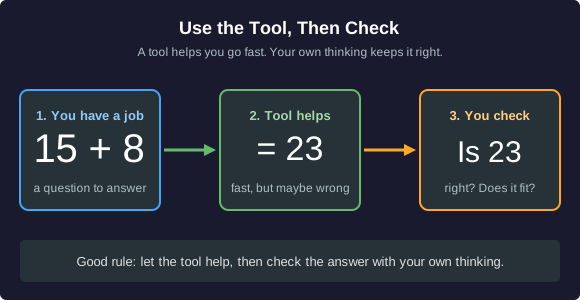
Så här är regeln: efter att ett verktyg har gett ett svar, stoppa och kontrollera det med ditt eget tänkande. Fråga dig själv: "Gör detta svar mening?"
Din tur
Din tur
Du vill räkna ut 15 + 8. Rätt svar är 23. Men din räknemaskin visar 95 eftersom en fel knapp trycktes.
Några uppgifter håller dig skarp
Gör vissa uppgifter själv
Verktyg är stora hjälpredor. Men om ett verktyg gör allt arbete åt dig, får ditt eget hjärna inte öva.
Tänk efter:
- Om en räknemaskin lägger till alla tal, lär du dig aldrig att räkna i huvudet.
- Om en stavningshjälpare rättar alla ord, lär du dig aldrig att stava.
- Om en karta-app alltid leder dig, lär du dig aldrig din egen näringsområde.
Din hjärna är som en muskel: den blir starkare när du använder den. Så för uppgifter som små summeringar, att stava ditt namn eller att binda dina skor, är det bra att öva själv. Spara verktyget för de stora, svåra jobben.
Din tur
Din tur
Tänk på att lära sig att addera små tal, som 2 + 3.
Hjälp, sedan kontrollera
Sammanfoga allt
Du har lärt dig tre stora idéer om hur man använder verktyg klokt:
- 1. Verktyg hjälper. De låter dig göra mer, snabbare.
- 2. Verktyg kan ha fel. Därför kontrollerar du alltid svaret med ditt eget tänkande.
- 3. Vissa jobb gör du själv. Det håller ditt hjärna skarp och hjälper dig att lära dig.
Här är en bra regel att komma ihåg: Använd verktyget för att hjälpa, kontrollera sedan med ditt eget tänkande. Verktyget är en hjälpare. Du är chefen.
Din tur
Din tur
En vän säger: "Jag kontrollerar aldrig min räknemaskin. Vad den än visar, det måste vara rätt!"