Welcome
A pocketknife is one of the most useful tools a person can carry. Used badly, it's also one of the most likely to send them to the emergency room.
Today you learn the four habits experienced knife users practice without thinking: the blood circle, cutting away, keeping it sharp, and the safe pass.
Habits beat rules. A rule has to be remembered each time. A habit fires on its own.
Let's start.
Warm-Up
Let's Start!
Almost everyone has seen an adult use a sharp tool safely.
Check Your Space
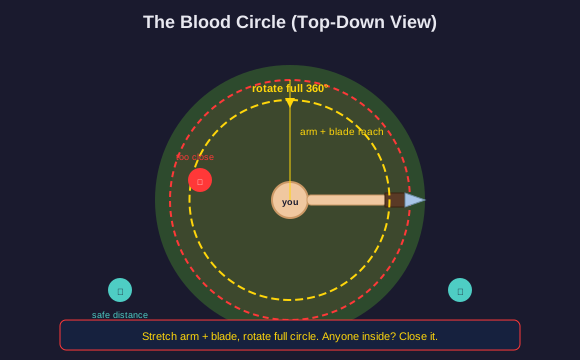
The Blood Circle
Before you open ANY blade, you check the blood circle:
1. Stretch your arm out to the side, holding the closed knife.
2. Rotate a full 360 degrees.
3. If anyone or anything you could hit is inside that circle, the knife stays closed.
This is non-negotiable. Friends step in from behind. Pets dash through. Younger siblings appear out of nowhere.
The full rotation matters. Looking forward only catches half the danger zone.
How Big Is the Circle?
You are about to open your knife to whittle a stick.
Direction Matters
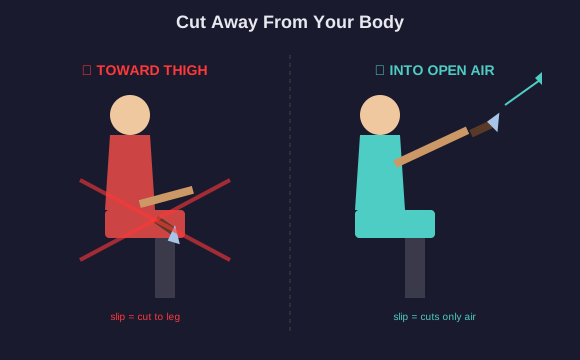
Always Away
When the blade slips, it goes in the direction you were pushing it. Slips happen. They happen to experienced people too.
Cut into open air or onto a stump. Never toward your body, never toward the hand holding the wood.
The classic injury: a kid sits cross-legged, whittles a stick on top of their thigh, the knife slips, and the blade goes into the leg.
Two rules that prevent this:
- Cut AWAY from your body — knee, thigh, stomach, fingers
- Keep the hand holding the wood OFF the cutting path
Name the Spot
Picture yourself whittling a stick. Think about where slips could land.
The Counter-Intuitive Truth
Why Pros Keep Blades Sharp
Most people think a dull knife is safer than a sharp one. It's the opposite.
A sharp blade glides through wood where you aim it. Little force needed. Total control.
A dull blade skids off the wood. To make it cut at all, you push harder. Then it slips — and goes wherever the extra force was sending it.
Force + slip = injury. Sharp blades need less force, so when they slip (and they will), they slip less violently.
Professional chefs, woodcarvers, and surgeons all keep their blades obsessively sharp. For safety.
Sharp or Dull?
You have two knives. One is razor-sharp. One is so dull you have to saw with it.
Handing Over a Knife
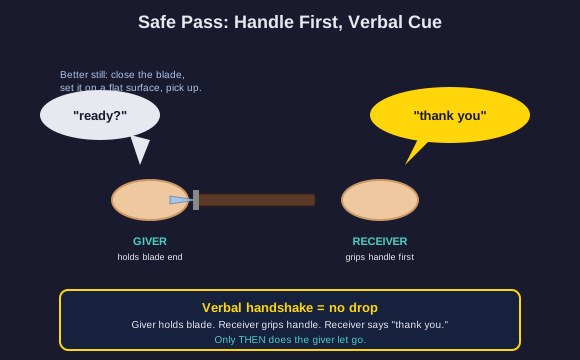
How to Pass a Knife
Best option: close the blade and set it on a flat surface. Let the other person pick it up.
If you must pass it open, use the handle-first method with a verbal handshake:
1. Giver grasps the BLADE side (carefully, dull edge).
2. Giver offers the HANDLE first to the receiver.
3. Receiver grips the handle firmly.
4. Receiver says 'thank you' (or 'got it') as a verbal confirmation.
5. Only THEN does the giver let go.
The verbal handshake prevents both people from letting go before the other has the knife. This single rule prevents most drop injuries.
Pass It Safely
Your friend asks for the knife you are using.
Your Default Habit
Habits Beat Rules
A rule is what you remember to do. A habit fires before you have time to think.
Of the four habits in this lesson — blood circle, cut away, sharp not dull, close before passing — pick the ONE you want to make automatic.