Benvenuto
Benvenuto nella geometria!
La parola geometria viene da due parole greche: geo (terra) e metria (misurazione). Migliaia di anni fa, le persone hanno inventato la geometria per misurare i terreni, costruire edifici e comprendere le forme che vedevano intorno a loro.
Oggi imparerai i mattoni fondamentali della geometria: punti, linee, angoli, forme e simmetria.
Iniziamo!
Punti, Linee, Raggi e Segmenti
I Mattoni Fondamentali
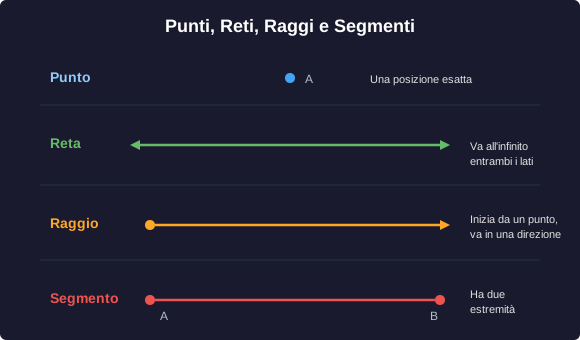
Ecco i quattro mattoni fondamentali della geometria:
- Un punto è un'ubicazione esatta. Lo disegniamo come un puntino e lo etichettiamo con una lettera come A.
- Una linea continua all'infinito in entrambe le direzioni. Ha frecce su entrambi i lati per mostrare che non si ferma mai.
- Un raggio inizia da un punto e continua all'infinito in una sola direzione. Pensa a un raggio di torcia: inizia da qualche parte e brilla verso l'esterno.
- Un segmento di linea ha due punti finali. È la parte di una linea tra due punti, come il bordo del tuo banco.
Linee vs. Raggi
Il Tuo Turno
Pensa alla differenza tra una linea e un raggio.
Che cos'è un Angolo?
Angoli
Un angolo si forma quando due raggi si incontrano in un punto. Quel punto di incontro si chiama vertice.

Ci sono quattro tipi principali di angoli:
- Angolo acuto — inferiore a 90 gradi. Sembra acuto e appuntito, come la punta di una fetta di pizza.
- Angolo retto — esattamente 90 gradi. Forma un angolo quadrato perfetto, come l'angolo di un libro o una porta.
- Angolo ottuso — più di 90 gradi ma meno di 180. Sembra largo e pigro, come appoggiarsi all'indietro su una sedia.
- Angolo piatto — esattamente 180 gradi. Sembra una linea piatta.
Ecco un trucco: se l'angolo si adatta all'interno di un angolo quadrato, è acuto. Se è più grande di un angolo quadrato, è ottuso.
Nomina Quell'Angolo
Il Tuo Turno
Immagina di prendere un libro e aprirlo a metà, in modo che i piatti anteriore e posteriore formino una forma a V.
Che cos'è un Poligono?
Poligoni
Un poligono è una forma chiusa fatta di lati diritti. I lati si collegano da un capo all'altro senza spazi.
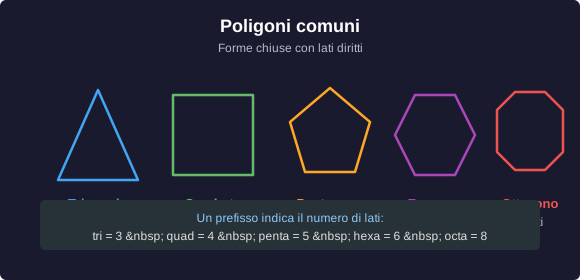
Ecco i poligoni più comuni:
- Triangolo — 3 lati (tri = tre)
- Quadrilatero — 4 lati (quad = quattro). I quadrati e i rettangoli sono quadrilateri speciali!
- Pentagono — 5 lati (penta = cinque)
- Esagono — 6 lati (hexa = sei). I favi sono fatti di esagoni!
- Ottagono — 8 lati (octa = otto)
Noti il modello? Il nome ti dice quanti lati ha la forma.
Nomina Quella Forma
Il Tuo Turno
Pensa a un segnale di stop. Ha 8 lati.
Linee di Simmetria
Simmetria
Una forma ha simmetria se puoi piegarla a metà e entrambi i lati coincidono esattamente.
La linea di piega si chiama linea di simmetria.

Alcune forme hanno molte linee di simmetria, e alcune non ne hanno:
- Un cuore ha 1 linea di simmetria: piegalo nel mezzo verticalmente.
- Un quadrato ha 4 linee di simmetria: verticale, orizzontale e entrambe le diagonali.
- Un cerchio ha infinite linee di simmetria: puoi piegarlo attraverso il centro in qualsiasi direzione!
- La lettera F ha 0 linee di simmetria: non importa come la piegi, i due lati non coincidono.
Prova questo a casa: ritaglia una forma da un foglio di carta e piegala. Se entrambe le metà coincidono perfettamente, la piega è una linea di simmetria!
Trovare la Simmetria
Il Tuo Turno
Pensa alla lettera maiuscola A.
Che cos'è il Perimetro?
Perimetro
Il perimetro di una forma è la distanza totale attorno all'esterno.
Immagina di camminare intorno al bordo di un campo da calcio. La distanza che cammini è il perimetro.
Per trovare il perimetro, somma le lunghezze di tutti i lati.
Scorciatoia del rettangolo:
Un rettangolo ha due lati lunghi (lunghezza) e due lati corti (larghezza).
Quindi il perimetro = lunghezza + lunghezza + larghezza + larghezza, che è lo stesso di:
Perimetro = 2 x lunghezza + 2 x larghezza
Ad esempio, un rettangolo di 6 metri di lunghezza e 3 metri di larghezza ha un perimetro di:
2 x 6 + 2 x 3 = 12 + 6 = 18 metri
Calcola il Perimetro
Il Tuo Turno
Un orto rettangolare è 8 metri di lunghezza e 5 metri di larghezza.