Hoş Geldiniz
Cebir dedektiflik işidir.
Birisi bir sayıyı saklamıştır. Size ipuçları vermiştir. Sizin görevi o sayının ne olduğunu bulmaktır.
Gizli sayının adı vardır: x. Bir değişken sadece bu — bilmediğiniz bir şeyin adıdır.
Bu dersin sonunda, gittikçe karmaşık yerlerden x bulabileceksiniz. Ve bunu yapabilir hale geldiğinizde, tüm ileri matematiklerin ana anahtarına sahip olacaksınız.
Isınma
Hızlı Bir Bulmaca
Bir an matematik dersini unutun. Sadece şunu düşünün:
Eğer 3 çanta elma toplam 12 pound ağırsa, bir çanta kaç pound ağırır?
Denge
Denge Metaforu
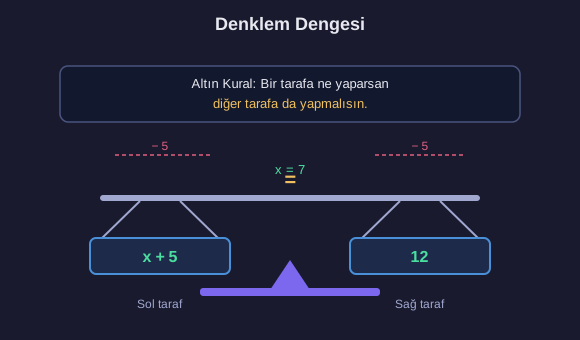
Bir denklem bir terazi midir. Eşittir işareti kasiyer noktasıdır. Sol taraftaki ne kadar ağırsa, sağ taraftaki da o kadar ağır.
Altın kural: bir tarafa yaptığınız her şeyi diğer tarafa da yapmalısınız. Sol tarafa 5 eklerseniz, sağ tarafa da 5 eklersiniz. Sol tarafı 3'e bölerseniz, sağ tarafı da 3'e bölersiniz.
Örnek 1: x + 5 = 12
x'e 5 eklenmişdir. x'i yalnız bırakmak için, ters işlemi yaparız — her iki taraftan 5'i çıkarırız.
x + 5 - 5 = 12 - 5
x = 7
Örnek 2: 3x = 21
x, 3 ile çarpılmıştır. x'i yalnız bırakmak için, ters işlemi yaparız — her iki tarafı 3'e böleriz.
3x ÷ 3 = 21 ÷ 3
x = 7
Toplama ↔ Çıkarma. Çarpma ↔ Bölme. Bunlar ters çiftlerdir.
Sıra Önemlidir
Özgürlüğe İki Adım
Şimdi x iki işlem tarafından kilitlenmişdir.
Örnek: 2x + 3 = 11
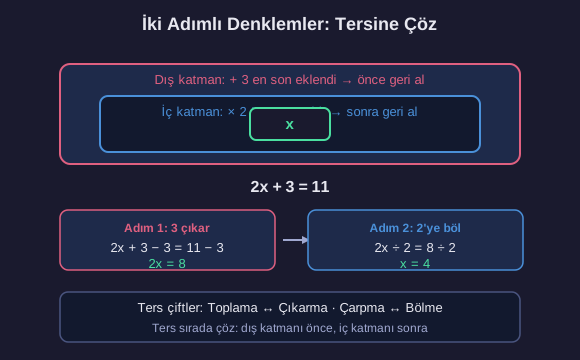
Bir paketi açmak gibi düşün. x'e önce 2 ile çarpıldı, sonra 3 eklendi. Bunu geri almak için, ters sırada gideriz:
Adım 1: Toplamayı geri al. Her iki taraftan 3'ü çıkar.
2x + 3 - 3 = 11 - 3
2x = 8
Adım 2: Çarpmayı geri al. Her iki tarafı 2'ye böl.
2x ÷ 2 = 8 ÷ 2
x = 4
Kural: toplama veya çıkarmayı önce geri al, sonra çarpma veya bölmeyi geri al. Katmanları ters sırada soyuyorsun.
Cevabını kontrol edebilirsin: 2(4) + 3 = 8 + 3 = 11. ✓
Değişkenleri Toplama
Ya x Her İki Tarafta Varsa?
Şimdiye kadar x sadece denklemin bir tarafında görülüyordu. Peki ya x her iki tarafta göründüyse?
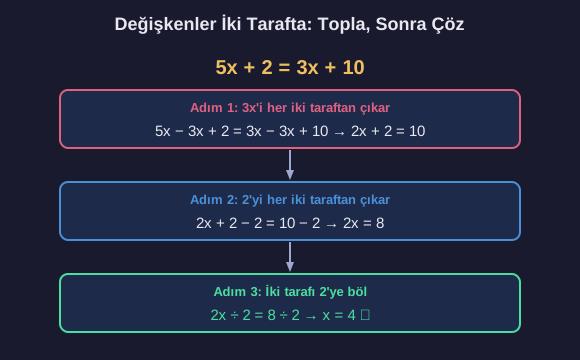
Örnek: 5x + 2 = 3x + 10
x sol tarafta ve sağ tarafta da vardır. Tüm x terimlerini bir tarafa toplamalıyız.
Adım 1: x terimlerini bir arada toplamak için her iki taraftan 3x'i çıkar.
5x - 3x + 2 = 3x - 3x + 10
2x + 2 = 10
Adım 2: Şimdi iki adımlı bir denklemdir. Her iki taraftan 2'yi çıkar.
2x = 8
Adım 3: Her iki tarafı 2'ye böl.
x = 4
Kontrol: 5(4) + 2 = 22. Ve 3(4) + 10 = 22. Her iki taraf 22 eşittir. ✓
Yeni hamle basittir: tüm x'i bir tarafa almak için daha küçük x terimini her iki taraftan çıkar. Sonra önceki gibi çöz.
İngilizceden Cebire Çeviri
Sözlerden Denklemlere
Cebirde en zor kısım denklemleri çözmek değil — onları kurmaktır. Gerçek problemler sembollerle değil, sözlerle gelir.
Çeviri rehberi:
- bir sayı → x
- iki katı veya çift → 2x
- artı, fazla, arttırılan → +
- eksi, daha az, azaltılan → -
- dir, eşittir, sonuçlanır → =
Örnek
"Bir sayı iki katı artı üç eşittir on beş."
Çeviri: 2x + 3 = 15
Çöz: 2x = 12, yani x = 6.
Hile yavaş okumak, parça parça çevirmek ve çözmeyi denemeden önce denklemi yazmaktır.
Denklemler Doğrulardır
Her Doğrusal Denklem Bir Doğrudur
Denklemleri çözmüş oldunuz — x'in bir sayı doğrusu üzerinde nereye iniş yaptığını bulmuşsunuz. Ama daha büyük bir resim vardır.
İki değişkenli bir denklem olduğunuzda, y = 2x + 3 gibi, her çözüm bir grafikteki bir noktadır. Ve tüm bu noktalar düz bir doğru oluşturur.
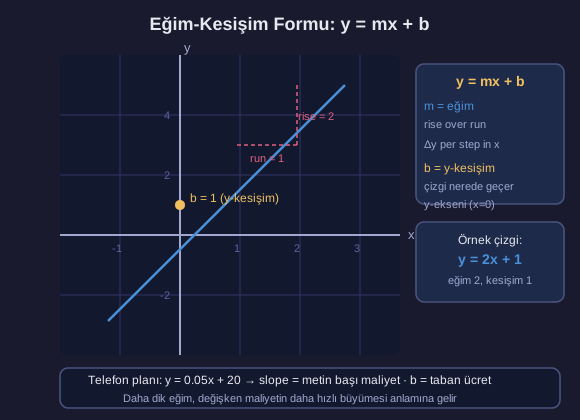
Eğim-Kesişim Formu: y = mx + b
- m eğim dür — doğru ne kadar diktir. x 1 arttığında y'nin ne kadar değiştiğini söyler.
- b y-kesişimi dir — doğru y-eksenini nerede kestiği. x = 0 olduğunda y'nin değeridir.
Telefon Planına Geri Dön
Telefon planınız: maliyet = 0,05 × (kısa mesaj sayısı) + 20
Veya eğim-kesişim formu: y = 0,05x + 20
- Eğim 0,05 — her ek kısa mesaj faturanıza 5 sent ekler.
- y-kesişimi 20 — sıfır kısa mesajla bile, 20 dolar ödersiniz.
Bunu grafiklendirirseniz, y-ekseninde 20 dolardan başlayan ve her kısa mesaj için 5 sent kadar yumuşak yükselen bir doğru görürdünüz.