Welcome
There is something special about a hot meal cooked over a fire after a long day outside. Even simple food tastes amazing.
But the outdoors is not your kitchen. Different rules apply. Hygiene, menu planning, fire safety, and leave-no-trace all matter.
Get these right and you cook for years without making yourself or anyone else sick. Get them wrong and one trip can wreck a campsite or send a friend home with food poisoning.
Let's begin.
Warm-Up
Let's Start!
Everyone has eaten food outside at some point.
Campsite Handwash
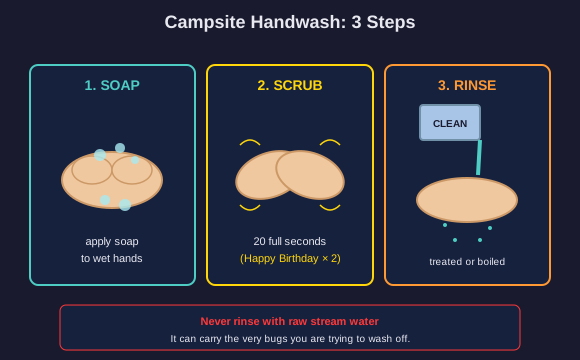
The Outdoor Handwash
Most campsite stomach trouble starts with dirty hands touching food. The fix is simple but easy to skip in the wild.
1. Wet hands with clean water (from a container, not the stream)
2. Soap thoroughly
3. Scrub for 20 seconds (about the time of singing Happy Birthday twice)
4. Rinse with more clean water
The key: rinse with TREATED or BOILED water — not raw stream water. Stream water can carry the very bugs you are trying to wash off.
Hand sanitizer works as a backup but never as the only step before handling food.
The Last Step
You are about to handle food at a campsite. You wet your hands and soap up.
Cooking Outside, Smart
Plan the Meal, Pre-Pack the Ingredients
Three rules for outdoor menu planning:
- Shelf-stable or coolable — oatmeal, eggs in a cooler, instant mix, dried fruit, hard cheese, nuts. Avoid anything that needs refrigeration without a cooler.
- Balanced — at least one carb and one protein per meal (oats + nuts, eggs + tortilla, beans + rice).
- Quick to cook — under 20 minutes if possible. Hungry hikers + slow stove = grumpy camp.
Pre-portion ingredients at home into labeled zip bags. At camp you dump and stir. Less mess, less cleanup.
Test new recipes in your backyard first. The campsite is not the place to find out your great idea doesn't work.
Plan a Breakfast
You and a friend are heading out for an overnight camp.
Tools That Keep Hands Cool
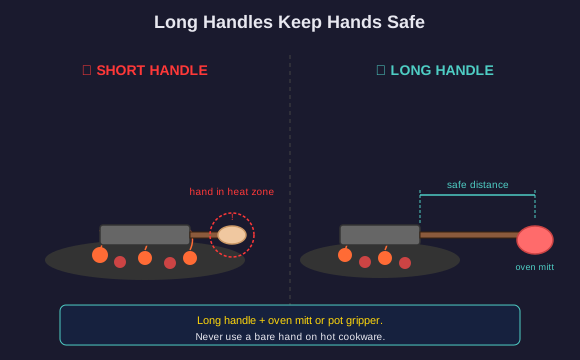
Safe Cookware
Cooking on coals or a campfire means hot stuff and unstable surfaces. A few habits make the difference between dinner and a burn:
- Long-handled tools — long spoons, tongs, lifters. Keep hands away from flame.
- Oven mitt or pot gripper — never use a bare hand on hot cookware. A glove or wet cloth is NOT enough; use a real mitt.
- Stable pot placement — set pots flat. A wobbly pot tips boiling water onto skin.
- Lift away from the body — same rule as a knife. If it slips, it slips into open air.
Have water within arm's reach in case of grease flare-ups. Have a lid handy to smother a small flame.
Why Long Handles?
You are choosing tools for outdoor cooking. There's a short-handled spatula and a long-handled one.
Pack It In, Pack It Out
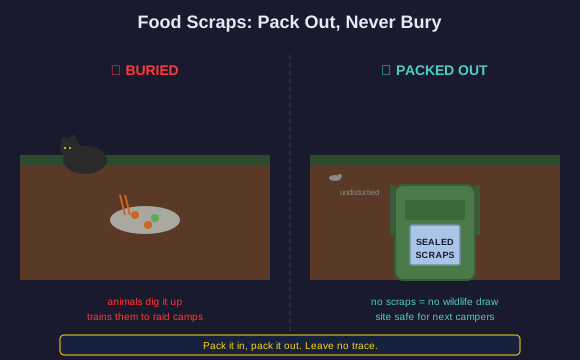
Why Buried Food Is Dangerous
Burying food scraps seems harmless. It's not. Animals dig them up within hours. The site now smells like food, so the next animals come too. Soon there's a wildlife problem at the campsite.
Bears in particular learn to associate campsites with snacks. Then they raid tents. Then they have to be killed because they have lost their fear of humans.
The rule: pack ALL food scraps out in a sealed bag. Carry them home (or to a trail trash can) for disposal.
Greywater (dishwater) gets strained, then scattered widely AWAY from streams. Strain bits go in the trash bag too.
Fire ashes get fully drowned and stirred until cool. (Remember drown, stir, feel from the fire lesson.)
The goal: someone walking through tomorrow should not be able to tell you were here.
Scraps at the Campsite
Dinner is done. There are food scraps left over.
Your First Outdoor Meal
Plan It
The best way to lock these skills in is to actually cook outside — in the backyard counts.
Pick something simple. Use a camp stove or a backyard grill. Practice the safety habits before you ever leave for a real trip.