Welcome
First aid is not about being a doctor. It is about staying calm, doing the right small thing, and getting an adult involved fast.
The five skills in this lesson cover what handles the vast majority of injuries you will witness as a kid: a scraped knee, a small cut, a minor burn, a bee sting, a tumble.
You will not need any of these skills 99% of the time. The other 1% they may save a friend.
Let's begin.
Warm-Up
Let's Start!
Almost everyone has dealt with a small injury, whether on themselves or someone they know.
The Rescue's First Rule
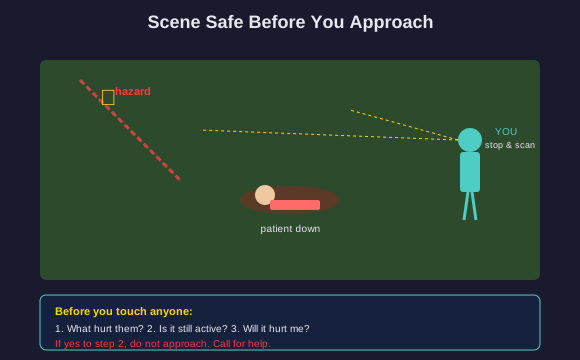
Stop. Look Around. Then Approach.
Movies show rescuers running straight to the victim. Real rescuers stop first.
If you become a second patient, no one is left to help anyone. The first move is always to check the scene.
Ask yourself three questions before you touch anyone:
1. What hurt them?
2. Is it still active? (a downed wire, traffic, an aggressive dog, falling debris, deep water)
3. Will it hurt me too?
If the hazard is still active, do NOT approach. Get an adult and call for help instead.
Before You Touch
You walk around the corner and see someone lying on the ground.
The Big Three Red Flags
Call Immediately For:
Some situations need professional help right now. Call 9-1-1 (or your local emergency number) for any of these:
- Not breathing, or breathing strangely
- No response when you call out to them
- Heavy bleeding that will not stop with direct pressure
- Possible broken neck or back (do not move them)
- Head injury with confusion or vomiting
- Signs of stroke (sudden face droop, slurred speech, weakness on one side)
- Severe allergic reaction (swelling of throat, trouble breathing, full-body hives)
Memory cue: Breathing, Bleeding, Response — the big three. Any one of those = call first, help second.
Minor scrape? Not a 9-1-1 call. Tell a parent or trusted adult instead.
When to Make the Call
You are with friends. Something happens. You need to decide fast: handle it, or call 9-1-1.
Stop Bleeding, Cool Burns
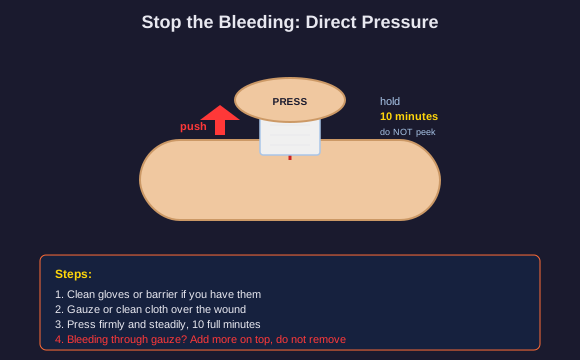
For a Cut: Direct Pressure
Most bleeding stops with the simplest treatment in medicine: direct pressure.
1. Put on clean gloves or use a barrier if you have one
2. Place clean gauze or cloth directly on the wound
3. Press firmly and steadily for 10 full minutes. Do NOT peek.
4. If blood soaks through the gauze, add more on top — never remove what is already there. Removing pulls the clot off.
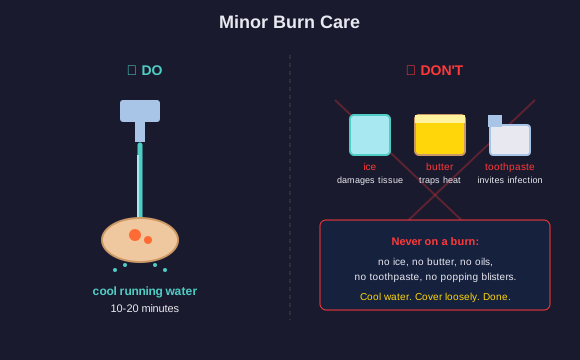
For a Minor Burn: Cool Running Water
Cool running water for 10-20 minutes. Not cold, not ice. Just cool tap water.
Never put ice, butter, oil, or toothpaste on a burn. Ice damages tissue. Butter and oil trap heat. Toothpaste invites infection.
After cooling, cover loosely with sterile gauze. If the burn is bigger than a quarter or shows blisters, get a grown-up to look.
Treating a Burn
Your friend touches a hot pan. They have a small red burn on their palm.
The First Aid Doesn't End at the Bandage
What Happens After
The first ten minutes after an injury is when things can quietly get worse: hidden bleeding, shock, late-onset dizziness.
Stay with the person. Watch them. Talk to them. Keep them calm.
Keep them warm. Cover with a jacket or blanket. Shock drops body temperature.
Watch for changes. Skin getting pale or sweaty? Speech getting confused? Bleeding through the bandage? Time to escalate.
Get an adult involved. Even for small injuries, a trusted adult should know what happened so they can watch for problems later.
Your job as the first helper is not just the bandage. It is being present until an adult takes over.
After the Bleeding Stops
Your friend cut their hand. You held pressure. The bleeding has stopped and the bandage is on.
Day-Hike First Aid Kit
One Kit, One Pack
Knowing what to do is half the battle. Having the right supplies is the other half.
Think about a small first aid kit you could throw in any pack.